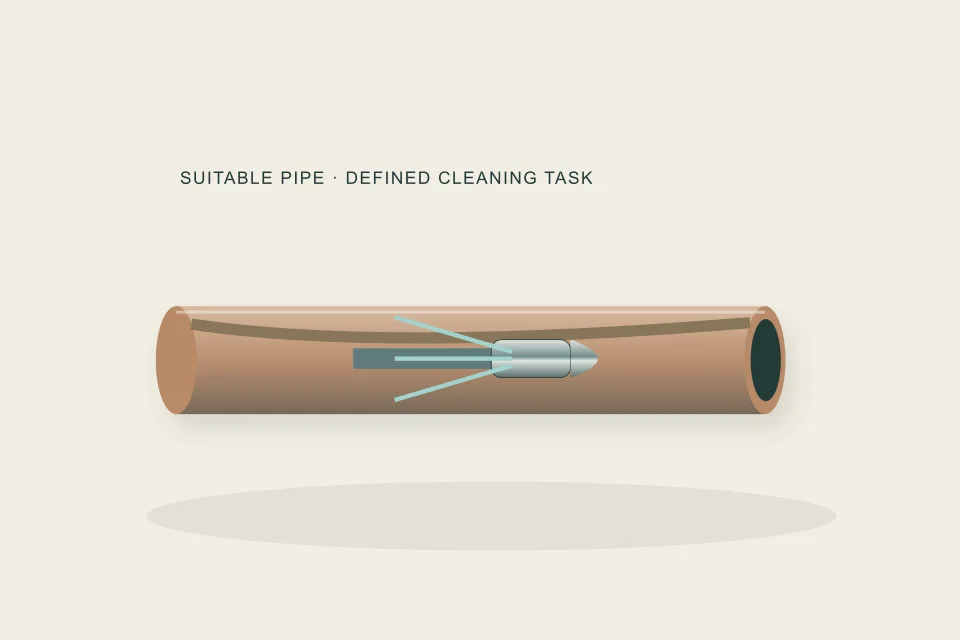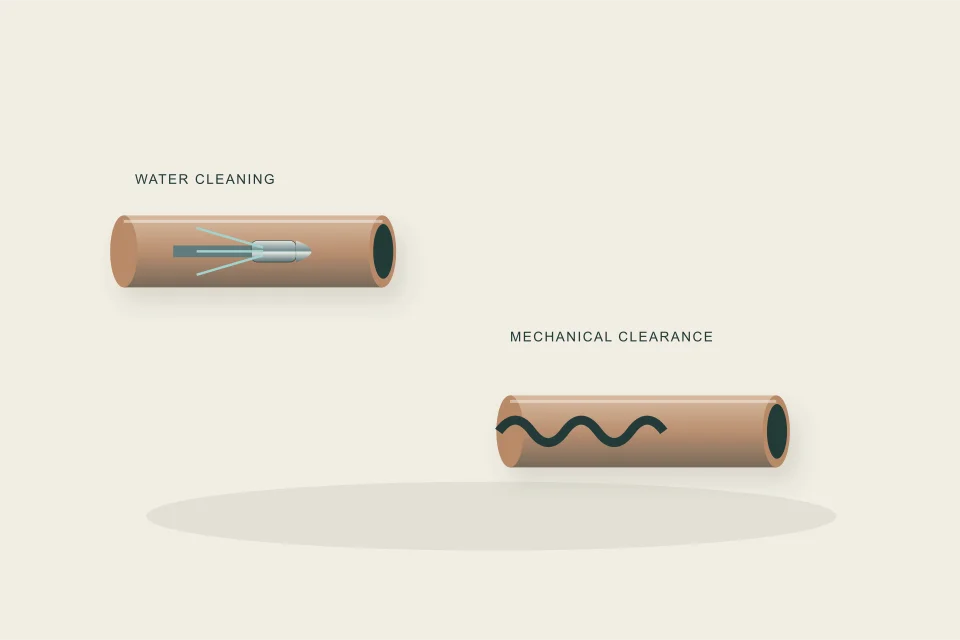
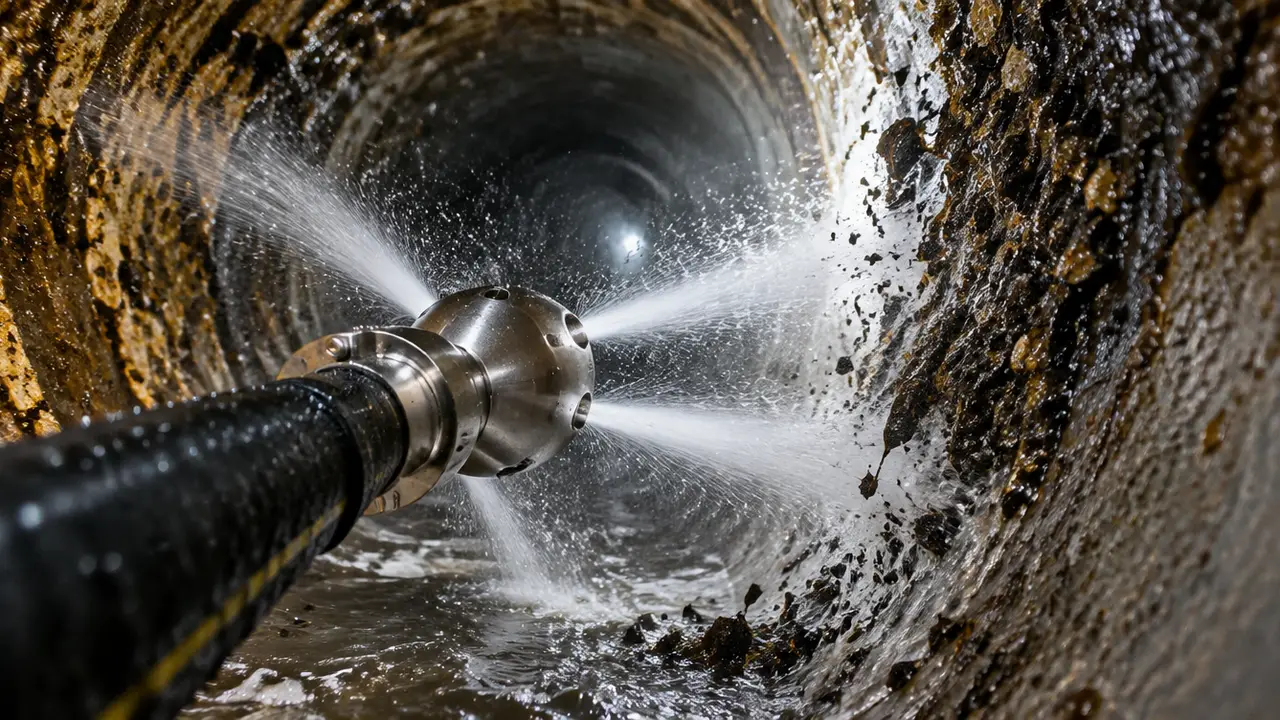
Jetting and augering have different cleaning actions. A cable works mechanically through an obstruction; water jetting can address suitable deposits along a pipe wall. The better question is what the provider expects to find, how it will be assessed and what outcome is required. Neither method is automatically best for every Calgary drain.
- A cable acts mechanically on a restriction; jetting uses water to clean suitable deposits.
- Choose an assessed cleaning objective before choosing a machine.
- Neither clearing method reconstructs a broken or misaligned pipe.
- Agree the evidence and approval needed before changing methods or adding work.
01 /What does a cable-based visit aim to do?
Drain augering advances a rotating cable with a task-specific head through an accessible drain. It may restore a passage through an obstruction, but the outcome depends on what is encountered and which parts of the line are reached. Ask the provider to name the intended task rather than describing a snake as a universal repair. A slow sink branch, an object lodged in a bend and roots entering an outside lateral each require a different assessment and sometimes different equipment.
02 /When is wall cleaning the question?
A recurring deposit can leave a narrow flow path even after an opening has been made. Jetting may be considered when the provider needs to work along accessible pipe surfaces, subject to condition and safe handling. Ask what supports the deposit diagnosis and how removed material will be managed. A video showing one restricted point is not necessarily a map of all connected branches. Keep the target section and desired cleaning result explicit before comparing the price of two methods.
03 /What can neither method resolve?
Cleaning cannot straighten an assessed low section, replace missing pipe wall or correct a disconnected joint. Flow restoration can still be worthwhile, but it needs a clear limit. Ask whether the proposed visit is a temporary clearance, preparation for a survey or a longer-term maintenance task. If a provider recommends construction, request the recorded finding that connects the condition to that recommendation. Do not accept a method name as a substitute for the problem being addressed.
04 /How can two bids be compared fairly?
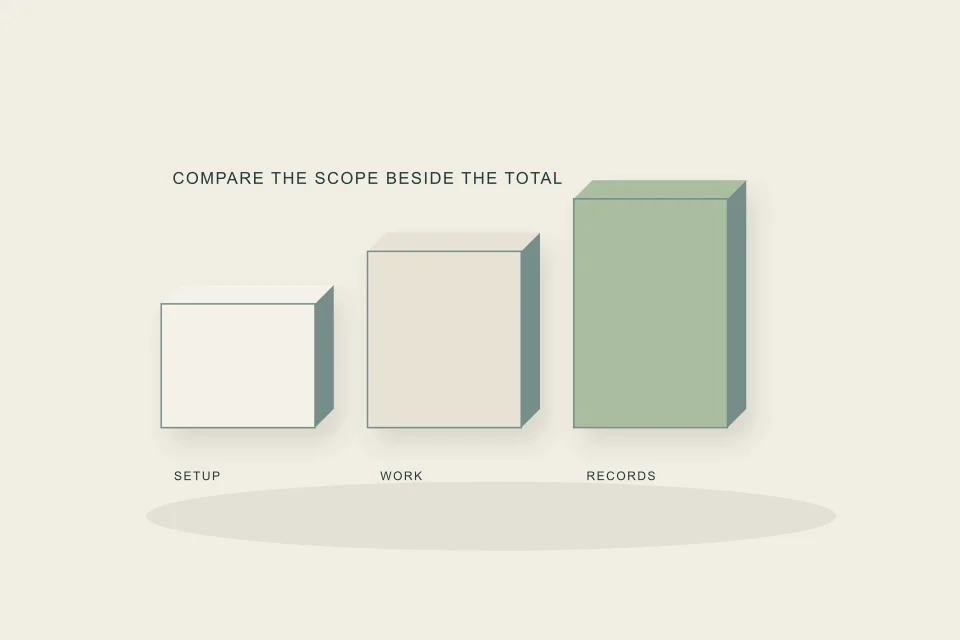
Give both providers the same symptoms, access information, prior records and requested endpoint. Ask whether camera work, locating, setup, disposal, travel and return visits are included. A cable-only price and a jetting-plus-survey price do not represent the same scope. Identify what each provider will do if the first approach cannot progress. Compare the approval process and deliverables alongside the total, including whether there is a defined stopping point rather than an open-ended time allowance.
05 /What should happen when the cause is uncertain?
An uncertain cause is useful information to retain. Ask for a staged plan: an initial assessment, a decision point and work authorized after that point. Explain that you want the reasoning behind the proposed method. The first stage may provide enough evidence for a simple clearing visit, or it may identify a different investigation. Avoid trying multiple household chemicals or rented machines to manufacture certainty. Tell the provider about products or earlier equipment already used so the work can be planned safely.
06 /How do the choices change in three practical examples?
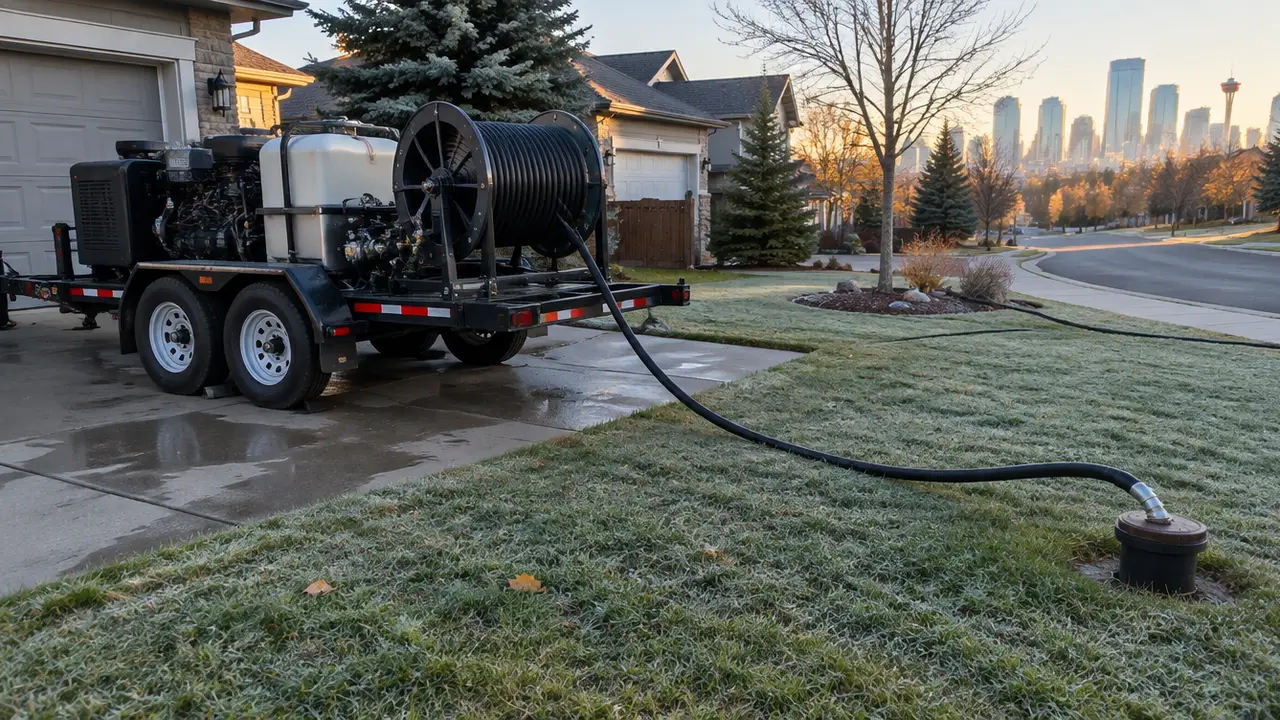
Consider three illustrative enquiries, not diagnoses. A single fixture with an unknown obstruction first needs an assessment of the connected branch and suitable access. A line with documented grease coating raises a wall-cleaning question as well as a flow-clearance question. A camera report showing an offset joint introduces a structural issue that neither cable clearance nor water cleaning alone corrects. In each case the useful choice begins with the finding and the task, rather than declaring one method universally better.
The examples also change what completion should demonstrate. Opening a path through a restriction is different from cleaning an agreed length of pipe. A post-work observation of a defective joint may justify a repair enquiry even when flow has improved. Ask the proposal to name both the immediate objective and the unresolved issue. If evidence is missing, request a bounded first assessment rather than authorizing a sequence of methods with no explanation of when each becomes appropriate.
07 /What should be agreed before escalating from a cable to a jetter?
Ask for a pause and a clear explanation when a provider recommends additional work outside the accepted scope. The explanation should identify what the first operation established, what remains restricted or uncertain, why the next method is proposed and how its result will be checked. A failed or incomplete attempt can provide useful information, but it does not by itself prove that a larger machine is the correct answer. Keep the recorded finding and the proposed change together.
Agree who may authorize that change and what happens if the line cannot be safely or effectively cleaned as planned. A commercial caretaker may be able to provide access without having spending authority; a homeowner may want to review footage before accepting a repair investigation. Have the provider distinguish the original visit from additional equipment, inspection or follow-up. That makes the comparison actionable while preserving the ability to stop and obtain a clearer scope when the buried condition remains uncertain.
08 /How can the first enquiry lead to a useful scope?
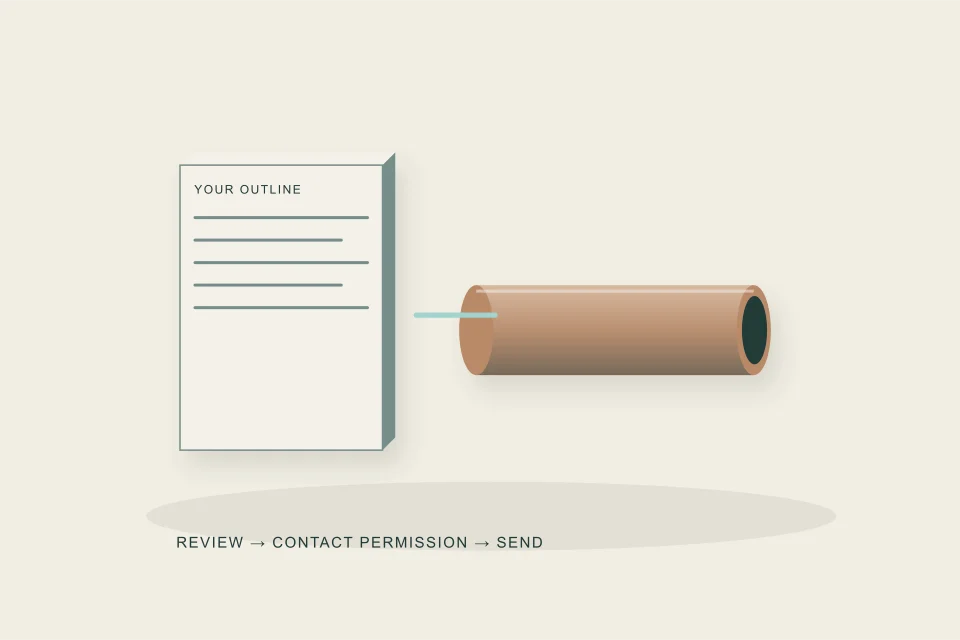
Include your city or postal code, the property use, affected fixtures and the timing of the problem. State what earlier clearing or inspection found, and attach records only through an agreed follow-up route. If access or material is unknown, say so. The request builder organizes these facts into an editable outline. It stays in this tab until you continue to the quote form, review the details and submit with contact permission. A generated outline does not reserve a visit or authorize equipment work.
Ask for a defined first task and a point at which further work needs approval. That task may be investigation, clearance or cleaning preparation for a survey. Identify who can grant access and who can approve extra work. A person available at the property may not be the person who approves the budget. Keep those roles clear so an uncertain finding produces a documented decision rather than an unreviewed expansion of the visit.
09 /What should you compare beside the cleaning price?
List the target section, setup, access assessment, machine work and expected completion evidence. Ask whether camera recording, locating and a return visit are included or priced separately. A lower headline can describe a smaller task. Give each bidder the same records and request the same outcome before comparing totals. This guide does not publish a fixed local price because the actual route, condition, access and work extent require assessment. The provider must confirm its final scope and price.
Make exclusions understandable. If a provider cannot complete the intended run, ask how it records that result and which next step may be needed. If restoration, repair or remediation is outside the task, identify it separately. Keep the written scope and completion record with the property history. Those records can explain a later event more accurately than a claim that the sewer was cleaned once, without any note of where the work began or ended.
10 /How does HAUSE follow-up work?
HAUSE Sewer is an independent information and service-request network and does not carry out drain or sewer work. A submitted request goes to the HAUSE team for review and, with permission, possible introduction to a qualified provider where available. The provider confirms suitability, availability and price. Ask HAUSE can explain general options and help you organize questions; it cannot diagnose the pipe, confirm an appointment or submit a request merely because you typed a message.
Keep account numbers, identification documents, tenant details and private insurance records out of general chat. Put only the needed contact and project information in the consent form. Confirm the location and best contact method before sending, and retain any on-screen submission reference. A failure message means the request needs attention; a locally generated brief alone is not proof of delivery. For an active hazard, use appropriate immediate assistance and do not wait for an online review.
FAQQuestions people ask
What should happen before a cable visit becomes a jetting visit?
Ask what the cable work established, what remains restricted and why jetting is proposed. Confirm suitability, the added cleaning extent, price and your approval before the provider expands the task.
Does HAUSE carry out hydro jetting?
No. HAUSE Sewer provides information and receives service requests. A qualified provider must assess the line and confirm any cleaning work, price and availability.
Can I request a quote through this site?
Yes. Use the cleaning request builder or the quote form, review the project details and give contact permission. The team can review the request and seek a provider introduction where available.
Does building the outline send anything?
No. Tool answers stay in this tab until you continue to the quote form and submit it. Review the carried-over outline before sending; it is editable.
Is hydro jetting always better than a snake?
No. The restriction, condition, access and cleaning objective matter. Ask the provider which method fits the assessed task and how it will demonstrate the result.
Can cleaning fix a broken or sagging pipe?
Cleaning does not reconstruct a damaged pipe or change its alignment. It may restore a passage or prepare for assessment, while a separate repair decision addresses the recorded physical condition.
NETWORKGo deeper across the HAUSE Sewer network
What is hydro jetting, and how does it clean a sewer line?
What hydro jetting is: how a sewer jetter uses rear-facing jets to pull a hose up the line, scour the pipe wall and flush debris out. Plain physics.
PipeCleaning.caPipe cleaning methods compared, method by method
Pipe cleaning methods compared: snaking, hydro jetting, descaling, chain knockers, enzymes and chemicals — what each removes, and which pipes each can harm.
DrainAugering.caDrain augering cost in Canada: what snaking typically costs in 2026
Drain augering cost in Canada for 2026: typical ranges to snake a sink, toilet, floor drain or main line, what raises the price and what a fair quote lists.